Remote Climate Tech Jobs in 2026: Where the Green Economy Actually Needs Software Engineers
Climate tech isn't just for environmental scientists anymore. The sector now employs thousands of remote software engineers, data scientists, and product managers — and the pay rivals Big Tech. Here's how to break in.
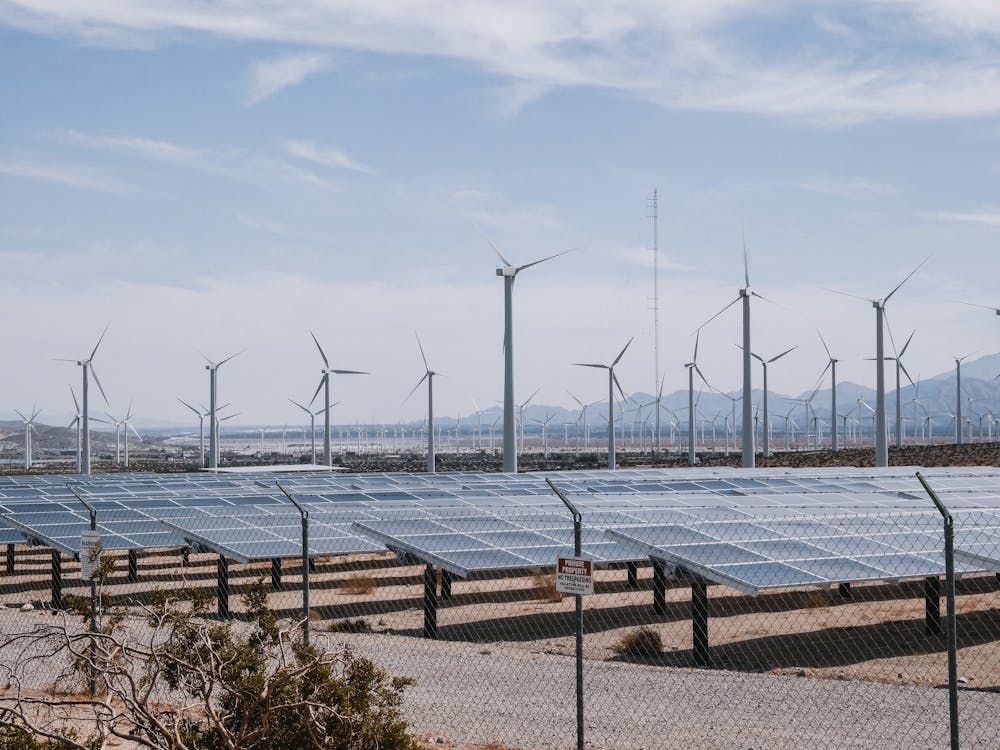
Remote Climate Tech Jobs in 2026: Where the Green Economy Actually Needs Software Engineers
Climate tech isn't just for environmental scientists anymore. The sector now employs thousands of remote software engineers, data scientists, and product managers — and the pay rivals Big Tech. Here's how to break in.
Last year, a client of ours at Warung Digital Teknologi asked us to build an IoT data pipeline for a solar farm monitoring system in Sulawesi. The project involved ingesting telemetry from 4,800 solar panels, running anomaly detection in near-real-time, and displaying everything on a dashboard the operations team could use from their phones. The entire engineering team — five people — worked remotely from three different countries.
That project changed how I think about climate tech. This isn't a niche sector powered by grant money and good intentions anymore. It's a $640 billion global industry in 2026, according to BloombergNEF estimates, and it's hungry for the same engineering talent that Big Tech hoards. The difference? Many climate tech companies were born remote-first, and they're actively hiring engineers who've never touched a carbon credit in their lives.
If you're a software engineer, data scientist, or product manager wondering whether climate tech is a real career move or just greenwashed marketing — this article breaks down the actual roles, salaries, companies, and paths in.
Why Climate Tech Is Hiring Software Engineers at Scale
Three forces are converging to make climate tech one of the fastest-growing employers of remote tech talent in 2026:
1. The Inflation Reduction Act (and its global copycats) created a funding tsunami. The IRA alone injected $369 billion into clean energy in the US. The EU's Green Deal Industrial Plan followed. So did similar legislation in Japan, South Korea, and India. All that capital needs software to be deployed efficiently — grid management systems, carbon accounting platforms, energy trading algorithms, EV fleet optimization tools.
2. Climate tech is fundamentally a data problem. Predicting energy output from a wind farm, optimizing battery storage cycles, modeling carbon sequestration in soil — these are all software and data challenges. The domain knowledge is environmental science, but the execution layer is Python, Kubernetes, time-series databases, and ML pipelines. That's why companies are hiring software engineers, not just climate scientists.
3. The sector skews remote-first. Unlike fintech or healthtech, where regulatory friction often ties teams to specific jurisdictions, many climate tech startups operate across borders by default. Their hardware is in fields and oceans; their software teams can be anywhere. ClimateTechList currently aggregates over 9,000 open positions from 500+ companies, and a significant share of the software roles are listed as remote.
7 Remote Roles That Actually Exist in Climate Tech Right Now
Forget vague titles like "sustainability coordinator." Here are the concrete engineering and product roles that climate tech companies post on job boards every week:
1. Backend / Full-Stack Engineer
Building the platforms that monitor energy grids, process carbon offset transactions, or manage EV charging networks. Typical stack: Python or Go backend, React or Vue frontend, PostgreSQL, deployed on AWS or GCP. Companies like Arcadia, Watershed, and Pachama all hire for these roles regularly.
2. Data Engineer
Climate tech generates enormous volumes of sensor data — weather stations, smart meters, satellite imagery, IoT devices on wind turbines. Data engineers build the pipelines that ingest, clean, and serve this data. Salary range on ZipRecruiter sits between $114K and $250K depending on seniority and location.
3. Machine Learning Engineer
Forecasting solar irradiance, predicting grid demand, detecting methane leaks from satellite imagery — all ML problems. Climate ML roles tend to favor candidates with experience in time-series forecasting, geospatial data, or computer vision rather than NLP or recommendation systems.
4. Climate Data Scientist
Slightly different from a standard data scientist role. You'll work with climate models (CMIP6, ERA5 reanalysis data), geospatial datasets, and often interface with actual climate scientists. The average US salary for a remote climate data scientist is around $165K according to current ZipRecruiter data.
5. DevOps / Platform Engineer
Climate tech systems often need to process streaming data from thousands of sensors with high reliability. Think Kafka, Terraform, Kubernetes, and monitoring stacks. If you've done platform engineering at any scale, the transition is smooth.
6. Product Manager (Climate / Energy)
PMs who can translate domain requirements from energy analysts or environmental scientists into product specs are scarce and valuable. Prior energy sector experience helps but isn't mandatory — strong technical PMs from other verticals get hired regularly.
7. Firmware / Embedded Systems Engineer
For hardware-adjacent climate tech companies (smart thermostats, EV chargers, grid sensors), embedded roles exist. These are less commonly remote than pure software roles, but companies like Span.IO and Sense have posted remote firmware positions.
Salary Reality Check: What Climate Tech Pays in 2026
Let's kill a persistent myth: climate tech does not mean taking a pay cut. Early-stage nonprofits might pay below market, but funded startups and growth-stage companies now compete directly with Big Tech on compensation. Here's what the data shows:
| Role | Remote Salary Range (US) | Source |
|---|---|---|
| Backend Engineer (Mid) | $120K – $175K | Climatebase, Glassdoor |
| Senior Full-Stack Engineer | $150K – $210K | ClimateTechList |
| Data Engineer | $114K – $250K | ZipRecruiter |
| Climate Data Scientist | $133K – $170K (avg $165K) | ZipRecruiter |
| ML Engineer | $140K – $220K | Glassdoor, Climatebase |
| DevOps / Platform Engineer | $130K – $195K | ClimateTechList |
| Product Manager | $125K – $190K | Glassdoor |
Some notes on these numbers. Equity can add 20–40% to total compensation at well-funded startups like Watershed (valued at $3.3B) or Redwood Materials. Geographic pay adjustments are common — expect 15–25% lower if you're based outside major US metros. European climate tech companies typically pay €80K–€140K for senior engineers, which is competitive for the EU market.
12 Climate Tech Companies Hiring Remote Engineers
This isn't an exhaustive list, but these companies consistently post remote engineering roles and have the funding to sustain hiring:
- Watershed — Carbon accounting platform. Series C, $3.3B valuation. Stack: TypeScript, Python, PostgreSQL.
- Arcadia — Clean energy data platform. Connects utility data to clean energy products. Fully remote.
- Pachama — Uses satellite data and ML to verify carbon credits. Heavy on geospatial ML.
- Climavision — Weather intelligence for energy and agriculture. Hires remote data engineers and ML engineers.
- Gridware — Grid monitoring hardware + software. Embedded and backend roles.
- Redwood Materials — Battery recycling at scale. More onsite hardware roles but remote software positions exist.
- Span.IO — Smart electrical panels for homes. Mix of remote and hybrid.
- Aurora Solar — Solar design and sales platform. Remote-first, hires across engineering.
- Sense — Home energy monitoring through ML on electrical signals. Python-heavy stack.
- Palmetto — Clean energy marketplace. Remote engineering team, React + Python.
- Sylvera — Carbon credit ratings (like Moody's for carbon). London HQ but remote engineering roles.
- Persefoni — Climate management and accounting platform. Enterprise SaaS for ESG reporting.
You can find current openings from these and hundreds of other companies on HireVane's job board, which aggregates remote tech positions across industries including climate tech.
The Tech Stack Climate Companies Want
Based on scanning roughly 200 climate tech job postings over the past month, here's what keeps showing up in requirements:
Languages: Python (dominant — 80%+ of data and backend roles), TypeScript/JavaScript (frontend and full-stack), Go (infrastructure and performance-critical services), Rust (emerging in embedded and grid systems).
Data & ML: Apache Kafka or Pulsar for streaming, Apache Spark or Databricks for batch processing, PostgreSQL with TimescaleDB for time-series, TensorFlow or PyTorch for ML models, dbt for data transformation.
Cloud & Infrastructure: AWS is the most common (especially S3, Lambda, ECS, SageMaker), followed by GCP. Terraform for IaC. Kubernetes for container orchestration. Many climate startups are cloud-native from day one.
Domain-specific: Geospatial tools (GDAL, PostGIS, Google Earth Engine), weather/climate APIs (NOAA, Copernicus), energy market data (ERCOT, PJM, CAISO), and carbon accounting frameworks (GHG Protocol, SBTi).
Here's the good news: if you've built production Python services, managed data pipelines, or shipped React apps — you already have 70–80% of what climate tech companies need. The domain-specific 20% is learnable on the job, and most hiring managers know that.
How to Break Into Climate Tech Without a PhD in Environmental Science
I've talked to hiring managers at three climate tech startups while researching this article, and they all said some version of the same thing: "We'd rather hire a strong engineer who's curious about climate than a climate expert who can't ship code."
Here's a practical path in:
Step 1: Build one climate-adjacent project. It doesn't need to be groundbreaking. Scrape electricity grid data from your local utility, build a dashboard showing renewable energy mix over time, deploy it on Vercel. Or train a simple model to forecast solar output using public weather data. The point is showing you can apply your existing skills to climate data.
Step 2: Learn the vocabulary. You don't need a climate science degree, but you should understand terms like carbon intensity, Scope 1/2/3 emissions, renewable energy certificates (RECs), grid curtailment, and marginal emissions factor. Terra.do and Climate Change AI offer free crash courses that take a few weekends.
Step 3: Join the community. MCJ Collective (My Climate Journey) runs a Slack with 10,000+ members and a dedicated #jobs channel. Work on Climate is another active community. These aren't just networking — people share insider hiring info, refer candidates, and post roles before they hit public job boards.
Step 4: Target your applications. Don't spray-and-pray. Pick 5–10 companies whose mission resonates with you, research what they're building, and write cover letters that connect your engineering experience to their specific technical challenges. Mention their product by name. Reference their recent blog posts or conference talks. Hiring managers in mission-driven companies care about alignment more than the average tech employer.
Step 5: Highlight transferable experience. Worked on IoT data at a non-climate company? That translates directly to sensor data pipelines. Built billing systems? Carbon accounting platforms need that. Shipped ML models for demand forecasting in e-commerce? Same problem structure as energy demand prediction. Frame your resume around the overlap.
Where to Find Climate Tech Roles
General tech job boards bury climate roles under thousands of unrelated listings. Use these specialized sources instead:
- HireVane — Aggregates remote tech jobs across verticals. Filter by "climate" or "energy" keywords to surface relevant roles.
- ClimateTechList — The most comprehensive aggregator, pulling from 500+ climate companies daily. 9,000+ open positions.
- Climatebase — Job board plus company directory. Good for discovering smaller startups you haven't heard of.
- Climate People — Curated board focused on climate and sustainability roles.
- Work on Climate — Community-driven. Members share roles in their Slack and newsletter.
- Terra.do Job Board — Connected to their climate education programs, so listings skew toward companies open to career transitioners.
Pro tip: set up alerts on ClimateTechList and Climatebase with your preferred role title. Climate tech hiring cycles can be fast — some startups fill roles within two weeks of posting.
How Climate Tech Interviews Differ From Standard Tech
The technical bar is roughly equivalent to mid-tier tech companies. You'll face coding rounds, system design discussions, and behavioral interviews. But climate tech adds a few twists:
Mission alignment questions are real, not performative. Expect questions like "Why climate?" and "What does climate justice mean to you?" These aren't gotchas — interviewers are filtering for people who'll stay when a FAANG recruiter comes knocking with a 30% raise. Have a genuine, specific answer ready. "I care about the environment" won't cut it. Talk about a specific climate problem that bothers you and why you think software can help solve it.
Domain knowledge gets tested lightly. You probably won't be asked to explain radiative forcing, but you might be asked how you'd approach a problem involving energy grid data or emissions calculations. Knowing the basics of how the sector works shows you're serious about the transition.
Take-home projects are more common than leetcode. Many climate tech companies — especially smaller startups — prefer take-home assignments that mirror real work. You might be asked to build a small data pipeline, analyze a dataset of energy consumption, or prototype a feature. This is actually good news if you're stronger at building than at whiteboard algorithms.
Culture fit leans collaborative. Climate tech teams tend to be cross-functional by necessity — engineers work alongside climate scientists, policy analysts, and hardware teams. Interviewers look for communication skills and humility more than raw technical dominance.
My Take: Is Climate Tech Worth the Career Pivot?
I'll be direct with my opinion: if you're even mildly interested in climate work, 2026 is the best time to make the move. Here's why.
The talent supply-demand imbalance is still in your favor. Climate tech funding grew 89% between 2022 and 2025, but the number of engineers entering the sector hasn't kept pace. That means less competition per role compared to general tech, especially for senior engineers. I've seen mid-level backend engineers get senior offers at climate startups because the applicant pool was thin.
The work is genuinely interesting from a technical standpoint. At Warung Digital, the solar farm project I mentioned earlier was one of the most technically challenging things our team worked on that year — real-time streaming data from thousands of IoT devices, geospatial visualization, and ML-based fault detection. The climate context made it more motivating, not less.
The risk is manageable. You're not leaving tech — you're applying the same skills in a different sector. If climate tech doesn't work out, your Python, Kubernetes, and data pipeline experience transfers right back to any other industry. There's no lock-in.
What I'd caution against: joining a company purely because of its mission without evaluating the engineering culture, funding runway, and product-market fit. Mission-driven burnout is real. Pick companies where the engineering team is respected, the codebase isn't held together with duct tape, and there's at least 18 months of runway. Climate tech has its share of companies that are all vision and no execution.
The green economy needs people who can ship production software, not just people who can write policy papers. If that's you, the door is wide open.
Ready to find your climate tech role?
Browse hundreds of remote tech positions — including climate and clean energy companies — on HireVane's job board.
Found this helpful?
Share it with someone who's job hunting!
Related Articles
Remote SRE Jobs in 2026: How to Break Into Site Reliability Engineering From Anywhere
Jun 8, 2026
How Many Applications Does It Actually Take to Get a Tech Job in 2026? The Hiring Funnel Data, Exposed
Jun 7, 2026